Reviewed: September 2022
Quick Take: When the Body Says No argues that chronic emotional suppression can contribute to immune dysfunction and, over time, serious illness. Dr. Gabor Maté presents the Seven A’s of Healing framework for recovery.
What if your chronic illness isn’t bad luck or genetics – but your body’s last-ditch effort to make you listen? Dr. Gabor Maté, a physician with decades of experience in palliative care and addiction medicine, argues precisely this in When the Body Says No: The Cost of Hidden Stress. This book isn’t about stress management tips. It’s about the price we pay when we’ve learned to say yes to everyone but ourselves – and how our bodies eventually do the saying no for us, through illness.
“When we have been prevented from learning how to say no, our bodies may end up saying it for us”
– Dr. Gabor Maté
The Mind-Body Split That’s Killing Us
Dr. Maté, drawing from decades of experience as a family physician and palliative care doctor, makes a compelling case that modern Western medicine has committed a grave error: we’ve separated mind from body, treating them as independent systems. Yet the science tells a radically different story.
Our emotional centres in the brain are physiologically connected to our nervous system, immune apparatus, and hormonal organs. They form one vast, intricately integrated super-system. Dr. Maté argues that chronic emotional stress—particularly stress we’re not even consciously aware of—can trigger measurable changes in our body’s ability to defend itself against disease. This is the premise of psychoneuroimmunology, the field studying how our psychological state can influence immune function. As Dr. Maté puts it, this isn’t mysticism — it’s biology.
Emotional Competence: The Missing Piece (Chapter 3)
Chapter 3 dismantles our assumptions about stress itself. Drawing extensively on Hans Selye’s pioneering research, Maté introduces the concept of “emotional competence” – a capacity desperately lacking in modern society. It’s not enough to manage stress; we must develop four essential abilities:
- The ability to feel our emotions – being aware when we’re experiencing stress, rather than numbing or denying it
- The skill to express emotions effectively – asserting our needs and maintaining healthy emotional boundaries
- The capacity to distinguish past from present – recognising when we’re reacting to old wounds rather than current reality
- The awareness of genuine needs – knowing what we truly need rather than constantly seeking others’ approval
When any of these is neglected, stress accumulates. It doesn’t just disappear because we’ve suppressed it. It lodges in our tissues, disrupts our immune function, and creates vulnerability to disease. As Dr. Maté writes: “Those seeking to heal, or to remain healthy, need to reclaim the lost capacity for emotional truth-recognition.”

The Cancer Personality: A Painful Recognition (Chapter 9)
One of the most confronting chapters explores what researchers have termed the “Type C personality.” We know about Type A personalities – driven, competitive, prone to heart disease. Type B personalities are more balanced. But Type C? These are people who appear extraordinarily cooperative, patient, passive, and pleasant. They’re the ones who never complain, who always put others first, who maintain a strong, happy exterior no matter what’s happening internally. It sounded uncomfortably familiar to me.
The crucial difference from genuinely easygoing Type B personalities is this: Type C people suppress negative emotions – particularly anger – rather than expressing them. They’ve learned, often in childhood, that their own needs don’t matter as much as keeping others happy. The research presented is sobering but Dr. Maté emphasises repeatedly: it’s not personality that causes cancer. It’s the chronic physiological stress that results from emotional repression that undermines the body’s immune defences. The personality traits are simply the visible manifestation of deeply learned coping patterns – usually formed in childhood when expressing authentic emotions felt dangerous. That means there is hope to change.
The Uncomfortable Truth About Being “Nice”
Perhaps the most challenging insight from this book is this: being too nice can literally kill you. “When we have been prevented from learning how to say no,” Dr. Maté writes, “our bodies may end up saying it for us” – the mantra that became the book title. This isn’t about becoming selfish or difficult. It’s about recognising that constantly sacrificing your own wellbeing for others isn’t noble – it’s dangerous. When you never express anger, never assert boundaries, never prioritise your own needs, you’re teaching your immune system to attack itself rather than defend you.
“We can learn to read symptoms not only as problems to be overcome, but as messages to be heeded”
– Dr. Gabor Maté
The Seven A’s of Healing: A Roadmap to Recovery (Chapter 19)
The final chapter offers genuine hope through what Dr. Maté calls “The Seven A’s of Healing.” This isn’t a quick fix – it’s a comprehensive framework for reclaiming emotional competence:
- Acceptance – The willingness to recognise and accept how things actually are, not how we wish they were. This challenges the deeply held belief that we’re not worthy of being whole.
- Awareness – Developing “emotional truth-recognition” – the capacity to notice what we’re actually feeling in our bodies. So many of us have become numb to our internal states.
- Anger – Learning to experience and express anger healthily. Dr. Maté cites research suggesting that cancer patients who could express anger toward their physicians lived longer than more passive patients. His argument is that suppressing anger keeps the stress response switched on, while expressing it appropriately may support healing.
- Autonomy – Developing clear personal boundaries – knowing what we want, what we value, what our limits are. Establishing internal control over our choices reduces stress and helps us prioritise genuine needs over compulsive people-pleasing.
- Attachment – Cultivating genuine emotional support and connection. Research consistently shows that people surrounded by loved ones are less susceptible to illness and better able to recover from disease.
- Assertion – Simply stating that we exist, that we have a right to be here, to be heard, to have needs. Many people Dr. Maté interviewed had never learned they didn’t need to justify their existence.
- Affirmation – Finding means of creative expression and connection to something greater than ourselves. This helps counter the isolation and loneliness that are themselves major sources of stress and disease.
Hope for Healing
Healing is possible. Dr. Maté shares numerous examples of patients who experienced remarkable recoveries – not through medical miracles alone, but by learning to honour their authentic emotional truth. The key insight is that the emotional patterns that increase disease risk aren’t innate personality traits. They’re learned coping mechanisms, usually adopted in childhood when authentic expression felt dangerous. And what was learned can be unlearned. As children, many of us had our natural emotional intuition “taught out” to make us “acceptable” social creatures. We learned to ignore gut feelings, suppress anger, deny needs, and put others first. But we can reclaim what was lost. The body has extraordinary self-healing capacities when we stop forcing it to absorb stress we refuse to acknowledge or express.

Beyond the Highlights: Four More Revelations
Maté’s exploration extends far beyond emotional competence and personality types. Chapter 15: The Biology of Loss reveals how childhood loss creates chronic stress responses that remain activated for decades, silently damaging immune function. The Dance of Generations (Chapter 16) examines the uncomfortable truth that we inherit not just our parents’ genes but their unresolved trauma – unconsciously transmitting suppression patterns to our own children.
Perhaps most challenging is Chapter 17: The Biology of Belief, which demonstrates that our core beliefs about our own worthiness create measurable physiological effects. Negative self-concepts aren’t just psychological – they’re immunological time bombs. Finally, The Power of Negative Thinking (Chapter 18) dismantles toxic positivity, proving that authentic expression of “negative” emotions is healthier than forced optimism. Suppression, not sadness or anger itself, creates the physiological damage.
My Personal Takeaway from When The Body Says No
Reading When the Body Says No fundamentally changed how I view the relationship between my emotional life and physical health. It made me start to notice when I’m suppressing feelings, practising saying no without guilt, allowing myself to feel and express anger appropriately.
Dr. Maté isn’t promising that emotional competence will prevent all illness. But he provides compelling evidence that chronic emotional suppression significantly increases disease risk – and that reclaiming authentic emotional expression can support healing and prevention. Our bodies are keeping score of all the emotions we suppress, all the boundaries we fail to maintain, all the stress we pretend isn’t affecting us. Eventually, for many people, the body says no. But we don’t have to wait for illness to be our wake-up call. As Dr. Maté reminds us: “We can learn to read symptoms not only as problems to be overcome, but as messages to be heeded.”
Who Should Read When The Body Says No?
This is one of my highly recommended reads for all new clients, and one of the foundational books in the mind-body field. It’s particularly valuable if you’re a chronic people-pleaser, struggle with boundaries, are curious about the connection between stress and physical health, or work in healthcare and want to understand this perspective on stress-related illness.
Related Reading & Purchase
If you found this review helpful, you may also be interested in:
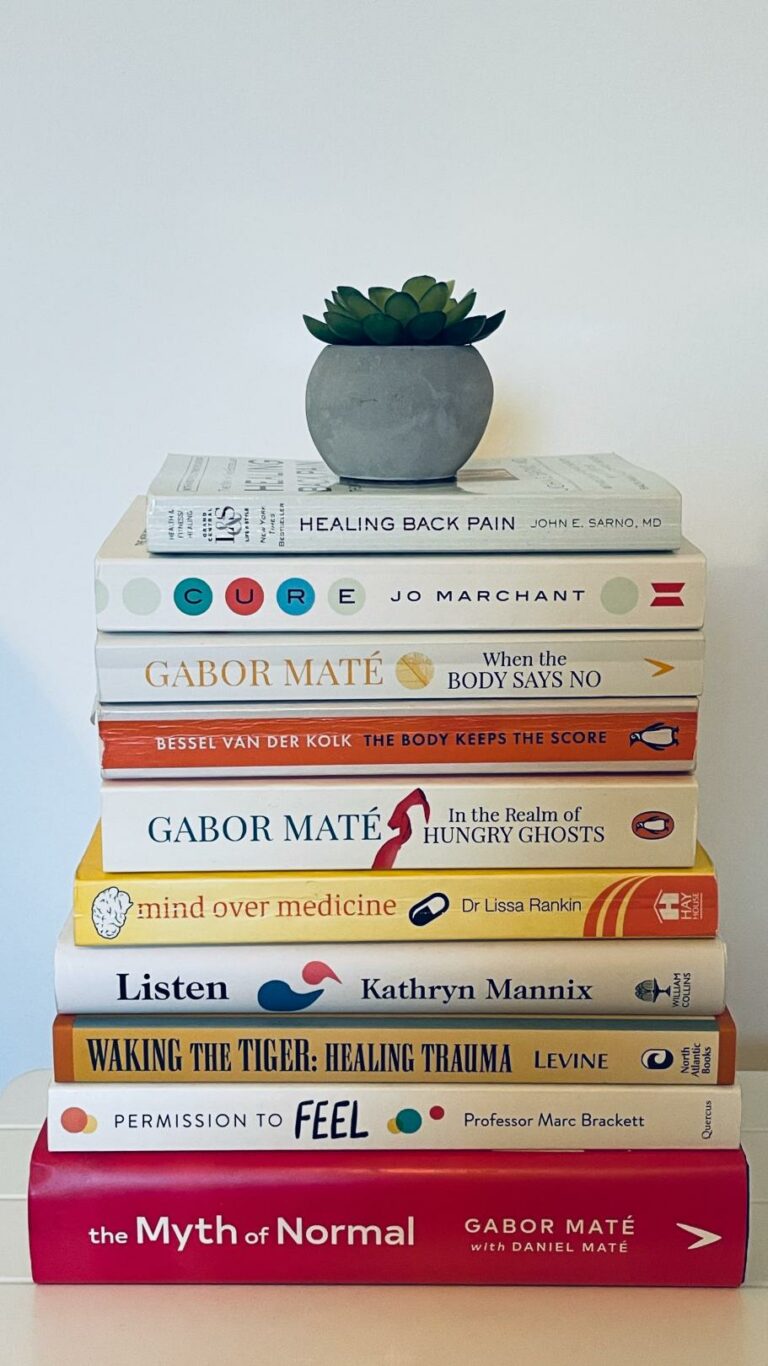
- The Myth of Normal by Gabor Maté. Read the review here.
- Permission to Feel: Unlocking the Power of Emotions to Help Our Kids, Ourselves, and Our Society Thrive by Dr. Marc Brackett. Read the review here.
- The Body Keeps the Score by Bessel van der Kolk.
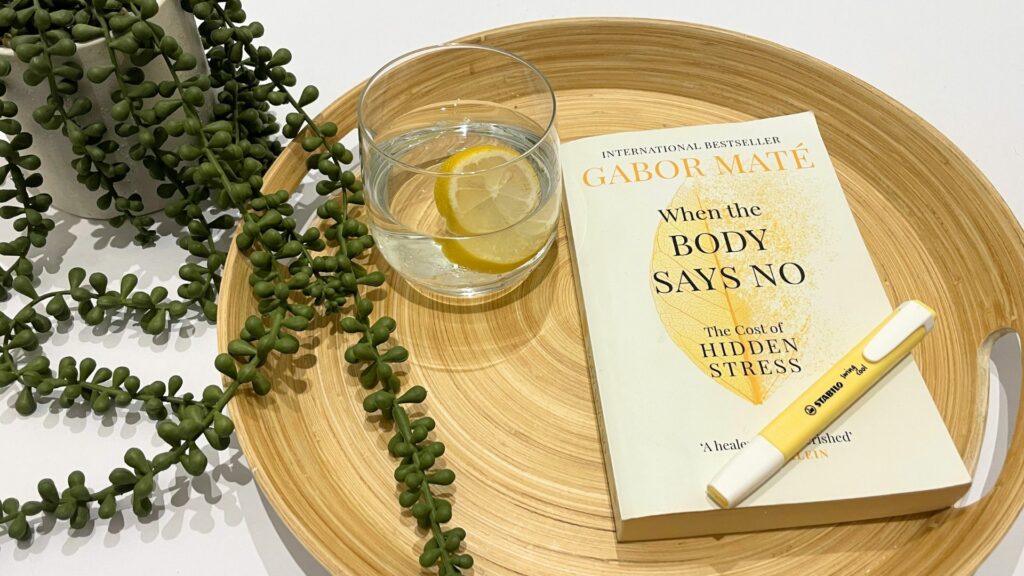
Purchase on Amazon: When the Body Says No: The Cost of Hidden Stress by Dr. Gabor Maté